
Musing
about all the feelings

I’m usually an optimistic person, able to find a state of acceptance and wonder ... even gratitude. I don’t rail about the rain or complain loudly in the elevator about the state of the environment (though it is an issue I care deeply about). I rarely get entangled by a stranger’s rant in the grocery store.
Lately though, I’ve felt sadness and in the next moment, I’m angry, very angry. Then I’m feeling helpless and believe any action I could take is a hopeless task. A friend shared that I don’t seem as happy as usual.
I almost retorted that that is because I am not particularly happy. It would seem ludicrous to walk around giddy with glee with all that is going on in the world.
It is a roller coaster that I think many who are reading this can relate to. Yet, it feels inappropriate to wish to just be “happy” all the time. I couldn’t put my finger on a particular reason why this was unreasonable, but it is a reality that I face.
I didn’t understand this, so I delved into etymology to see what “feeling” might be best in these times as a state of balance rather than getting caught up in scrolling and reading others’ sense of outrage about current events and all the feelings that can stir up. Where would be a good place to bring myself back to, hand to heart kind of stasis when I feel myself reeling and reacting.
Here is some of what I found. The etymological explanations come from https://www.etymonline.com/ …
happy (adj.)
late 14c., “lucky, favored by fortune, prosperous;” of events, “turning out well,” from hap (n.) “chance, fortune” + -y (2). Sense of “very glad” first recorded late 14c. Ousted Old English eadig (from ead “wealth, riches”) and gesælig, which has become silly. Meaning “greatly pleased and content” is from 1520s. Old English bliðe “happy” survives as blithe. From Greek to Irish, a great majority of the European words for “happy” at first meant “lucky.” An exception is Welsh, where the word used first meant “wise.”
Well, lucky depends on what is happening at the moment and that doesn’t work when events are a roller coaster out of control totally controlled by clowns.
Ruled that out pretty quick.
Would contentment do?
c.1400, from Old French content, “satisfied,” from Latin contentus “contained, satisfied,” past participle of continere (see contain).
Well, there are events and activities going on in the world which I cannot feel satisfied about. Nothing seems to have a container where I could reach in and find contentment.
Better, but not quite right for our times.
A Buddhist friend works toward equanimity which seems a good and sensible thing...
c.1600, “fairness, impartiality,” from French équanimité, from Latin aequanimitatem (nominative aequanimitas) “evenness of mind, calmness,” from aequus “even, level” (see equal (adj.)) + animus “mind, spirit” (see animus). Meaning “evenness of temper” in English is from 1610s.
Evenness of mind can be in my control even though impartiality is right off the charts for me. I cannot find where I could be impartial and fairness doesn’t seem within reach right now.
To be fair, I can only be “fair” within my own personal circles, which are few and small. Not a solution for the overall state of events.
What I’d like to offer is that we stop vilifying emotions by calling them good or bad. They are just feelings and we don’t have to act on them.
For a start we can just allow ourselves to feel melancholy when we do and notice how that feels in our bodies. Then go about what needs doing … or if nothing needs doing just go about feeling melancholy.
We rail about the weather, the state of the environment, politics—no matter what our personal political stripe is, the behaviour of others … but in the instant we really have no power over any of that in the immediate. It is only setting ourselves up to believe that we are the centre of the universe.
We are not the centre of the universe, but we can use what agency, energy, and skill we have to make the changes that we believe the world needs, by starting in our little corner, our little circles.
We do have influence. That influence lies in relationships. Instead of labelling, name calling, allowing ourselves to get caught up in someone else’s rage baiting, let’s take a breath and speak to a person, not a label, not a political ideology, a flesh and blood person who may not have the facts, who may just be having a bad day, or who is so entrenched in conspiracy theories that it would be a waste of time and breath to try to “educate” them.
Let’s start honouring that we are all inextricably connected with each other and the earth, and that we can only be in one place in time. Working from that may not always make us “happy” … but it’s a good place to start on equanimity and maybe even contentment.
In those moments, when you find yourself getting pulled on to the roller coaster, let yourself bring hand to heart and allow yourself to let go of being right and just be kind, now and again. Kind to others and most definitely kind to yourself...and find some little thing to bring joy into your life.
Where I live Spring is peeking out, songbirds are migrating back as they always do, always have done, and soon the tight buds on the trees and shrubs will burst into blossom. And that is a good and happy thing. I find poetry brings pleasure to my life and am so grateful for all the poets here on Substack. And art—sweet and whimsical, landscapes that take my breath away. Tip of the hat to Jill Badonsky. Art and creativity is what lasts. And so I invite you to keep up with the news, if you must, and really, we must, but also to find some soothing words and images. And so I will share some of those here…
My husband frequently quotes a poem by Li Po and I share this today in all its appropriateness.
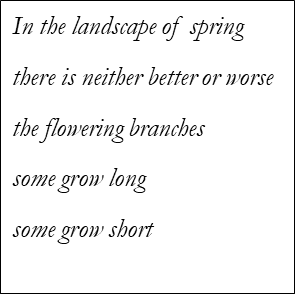
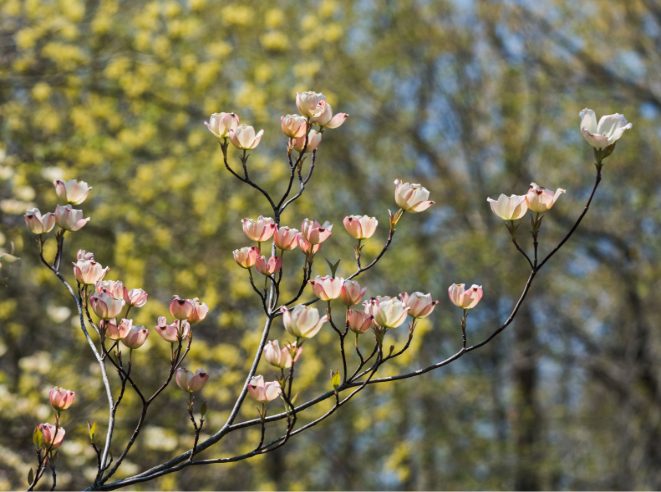
Photo Credit Jeff Suchak
Be kind. Go gently. Stay curious!
I’d really appreciate your comments about how these posts make you feel. If you have a friend or colleague who might benefit from or even enjoy an exercise in pondering how to be authentic and balanced in this wacky world, please share. I’d love the company.